How to Locate Hidden Leaks Before Damage Spreads
October 28, 2026
A water stain on the ceiling is rarely where the problem began. By the time moisture shows up on drywall, flooring, or trim, water may have been traveling through a wall cavity or along a pipe for days. Knowing how to locate hidden leaks can help you limit damage, protect your home’s finishes, and make a more informed call when professional repair is needed.
A hidden leak does not always mean a burst pipe or a plumbing emergency. It can be a slow drip under a sink, a failing toilet seal, a pinhole in a supply line, or a small leak at a water heater connection. The key is to look for patterns, confirm whether water is moving when it should not be, and avoid opening walls until the evidence points to a likely source.
Start With the Water Meter
Your water meter is one of the best tools for finding a leak that is not visible. Choose a time when nobody will need water for at least 30 minutes. Do not run faucets, flush toilets, start the dishwasher, use the washing machine, or let an irrigation system run.
Find the meter, usually near the street or property line, and look for the low-flow leak indicator. Depending on the meter, it may be a small dial, triangle, star, or digital icon. If it moves while all water use is off, water is likely flowing somewhere in the home or on the property.
For a second check, record the meter reading, wait 30 to 60 minutes without using water, then compare the reading. A change confirms water use. It does not tell you exactly where the leak is, but it gives you a useful starting point.
If the meter is moving, shut off the home’s main water valve and watch the meter again. If movement stops, the leak is likely on the house side of the meter. If it continues, the issue may be between the meter and the shutoff valve, or it may involve an outdoor line. That distinction matters when planning the next step.
Look for the Quiet Warning Signs
Not every hidden leak produces a puddle. Slow leaks tend to leave smaller clues first, especially around fixtures, cabinets, floors, and walls near bathrooms, kitchens, laundry rooms, and mechanical spaces.
Watch for these signs:
- A water bill that rises without a change in household use
- Musty odors in a bathroom, vanity cabinet, closet, or lower level
- Soft flooring, loose tile, lifted vinyl, or warped baseboards
- Peeling paint, bubbling drywall, or yellow-brown ceiling stains
- A water heater area that stays damp or shows mineral buildup around connections
- Mold or recurring mildew that returns after normal cleaning
One sign alone does not always prove a plumbing leak. Condensation, poor ventilation, roof leaks, and spills can create similar symptoms. Several signs in the same area deserve closer attention.
Check Toilets Before Opening a Wall
A toilet can leak hundreds of gallons over time without leaving water on the bathroom floor. The most common hidden toilet leak is water moving from the tank into the bowl because the flapper is not sealing properly.
Add a few drops of food coloring to the toilet tank and wait 15 to 20 minutes without flushing. If color appears in the bowl, the toilet is leaking internally. This is usually a straightforward repair, but it can explain unexplained meter movement and high water use.
Also inspect the floor around the toilet. Movement at the base, a persistent sewer-like odor, discoloration near the flooring edge, or dampness around the toilet bolts can point to a failing wax ring or drain connection. That type of leak may only appear when the toilet is flushed, so a meter test alone may not catch it immediately.
Inspect Fixtures and Appliances Methodically
Start with accessible areas. Open the cabinets below kitchen and bathroom sinks and use a dry paper towel to wipe supply valves, shutoff valves, drain traps, and pipe joints. Even a tiny amount of moisture on the towel is worth investigating.
Look closely at the connections for your dishwasher, refrigerator water line, washing machine, water heater, water softener, and filtration equipment. A slow leak can collect behind an appliance or run down a pipe before reaching the floor. Mineral residue, rust, swollen cabinet material, or a white crust around fittings often points to a long-term seep.
For homes with water treatment equipment, check the drain line, bypass valve, fittings, and the floor around the system. A water softener or reverse osmosis system should not leave recurring moisture in the cabinet or mechanical area. Some drain lines discharge during regeneration or filter operation, so the timing matters. What looks like a leak may be normal operation, but standing water, dripping connections, or damaged tubing are not normal.
Water heaters need the same attention. Check the cold-water inlet, hot-water outlet, temperature and pressure relief valve discharge pipe, drain valve, and the floor beneath the tank. With a tankless water heater, inspect isolation valves and visible connections for moisture or mineral deposits. Condensation can occur in certain situations, but repeated dripping should not be ignored.
How to Locate Hidden Leaks Behind Walls and Under Floors
When the meter suggests a leak but visible plumbing looks dry, narrow the search before removing drywall or flooring. Turn off individual fixture shutoff valves where possible, then repeat the meter check. If meter movement stops after a specific fixture or appliance is isolated, you have a much smaller area to investigate.
Pay attention to where water is showing up, but do not assume the source is directly above it. Water follows framing, pipes, wiring penetrations, and gravity. A ceiling stain beneath an upstairs bathroom may come from a shower valve, drain, toilet, or supply line several feet away from the stain.
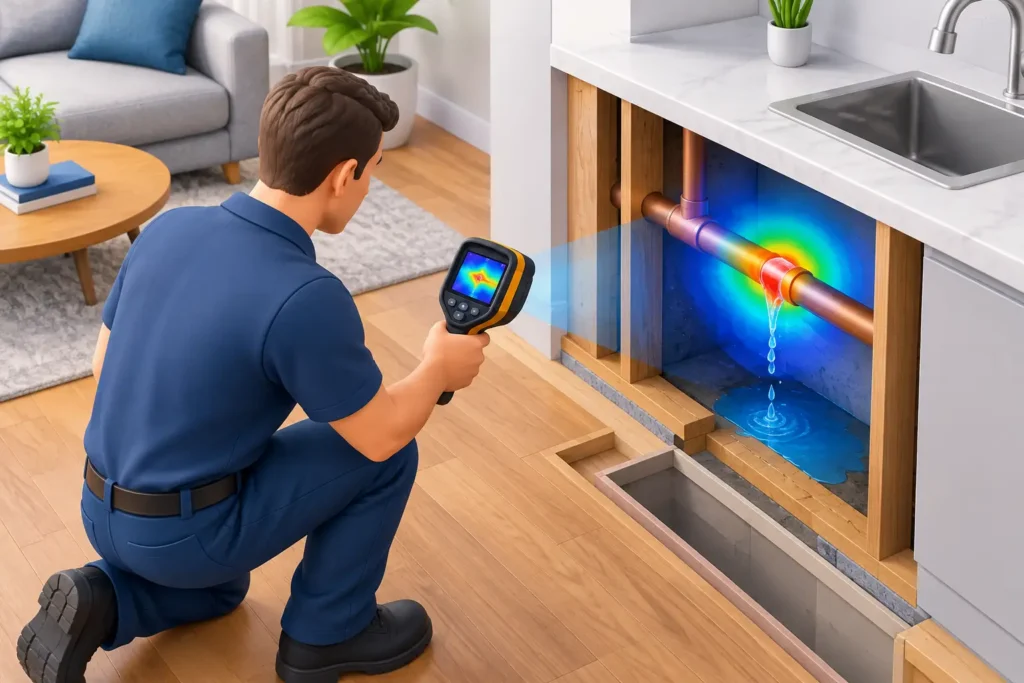
A moisture meter can help confirm whether drywall, trim, or flooring is damp. An infrared camera can also identify temperature differences that may indicate moisture, although it cannot confirm a leak by itself. Cool spots can result from insulation gaps, air movement, or outdoor temperature changes. These tools are useful for narrowing the area, not replacing a proper diagnosis.
Professional leak detection is often the best choice when pipes are concealed in walls, slab foundations, or finished ceilings. A licensed plumber can use pressure testing, acoustic equipment, moisture readings, and targeted inspection to identify the likely failure point with less unnecessary demolition. This is particularly valuable in remodeled homes, where opening the wrong wall can create expensive finish repairs.
Do Not Forget Outdoor Plumbing
In Boise and surrounding communities, seasonal temperature changes make exterior plumbing worth checking. A leaking frost-free hose bib, cracked irrigation line, or damaged outdoor supply pipe can affect the water meter without leaving obvious indoor evidence.
Walk the property and look for unusually green patches, soft soil, pooling near exterior walls, or water collecting around hose connections. Turn off irrigation at the controller and, if possible, isolate the irrigation supply before repeating your meter test. If the meter stops moving when irrigation is shut down, the issue may be in the backflow assembly, valve box, drip system, or underground line.
Outdoor leaks are easy to overlook because the ground can absorb a surprising amount of water. They can still waste significant water and, in some cases, affect foundations or hardscaping.
When to Shut Off Water and Call a Plumber
Shut off the main water supply right away if you have active water coming through a ceiling, a rapidly spreading wet area, a burst pipe, or water near electrical fixtures or outlets. If water is near electricity, avoid touching wet switches, appliances, or panels.
For a slow leak, take clear photos, note the meter reading, and record when you first noticed the issue. Avoid repeatedly using the fixture you suspect. A shower drain leak, for example, may only worsen with each use, while a pressurized supply-line leak can continue even when no fixture is running.
A professional repair is especially appropriate when the meter confirms a leak but the source is not accessible, when there are signs of mold or damaged framing, or when a leak involves a water heater, main line, slab, or remodel plumbing. Straightforward diagnosis protects the home and helps avoid paying for repairs based on guesswork.
If you suspect a hidden leak, acting early is usually less disruptive than waiting for visible damage to make the decision for you. A careful meter test and a focused inspection can provide useful answers, and a qualified plumber can take it from there when the source remains out of sight.